📍 Travel Guide
Alabama's Best Destinations
From Gulf Coast paradise to Appalachian heights — explore the remarkable places that make Alabama one of America's most rewarding travel discoveries.
From Gulf Coast paradise to Appalachian heights — explore the remarkable places that make Alabama one of America's most rewarding travel discoveries.
Alabama's geography spans five distinct regions — the Tennessee Valley, the Appalachian Highlands, the Piedmont Plateau, the Gulf Coastal Plain, and the Coastal Lowlands — each offering an entirely different flavor of travel experience.
Planning a trip to Alabama invites a delightful challenge: there is simply too much to experience in any single visit. The state's remarkable geographic and cultural diversity means that no two corners of Alabama feel quite alike. A traveler who spends a morning kayaking through the mirror-calm waters of the Talladega National Forest might spend the afternoon exploring world-class Civil Rights museums in Birmingham, then find themselves dining on freshly caught Gulf snapper at a waterfront restaurant in Mobile that very evening.
Alabama's tourism infrastructure has grown enormously in recent years, yet the state retains an authentic, unhurried quality that sets it apart from more heavily marketed Southern destinations. You can still stumble upon remarkable places — a hidden waterfall, a legendary barbecue joint that's been smoking brisket since 1925, a tiny town with an extraordinary local museum — that feel like genuine discoveries rather than packaged experiences.
The following guide covers Alabama's most compelling destinations in depth, providing the insider knowledge and practical information you need to plan a truly extraordinary trip through this magnificent state. Whether you have three days or three weeks, whether you're drawn to beaches or mountains, history or nature, food or football — Alabama has something extraordinary waiting for you.
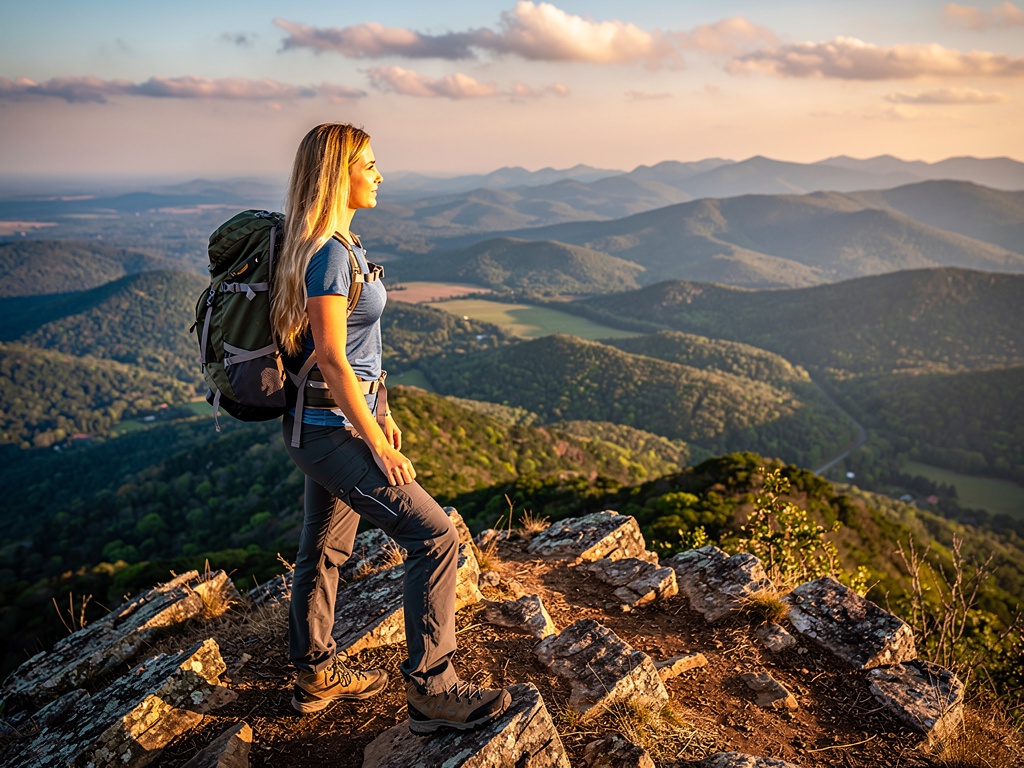
Summit views from Cheaha — Alabama's highest point at 2,413 feet
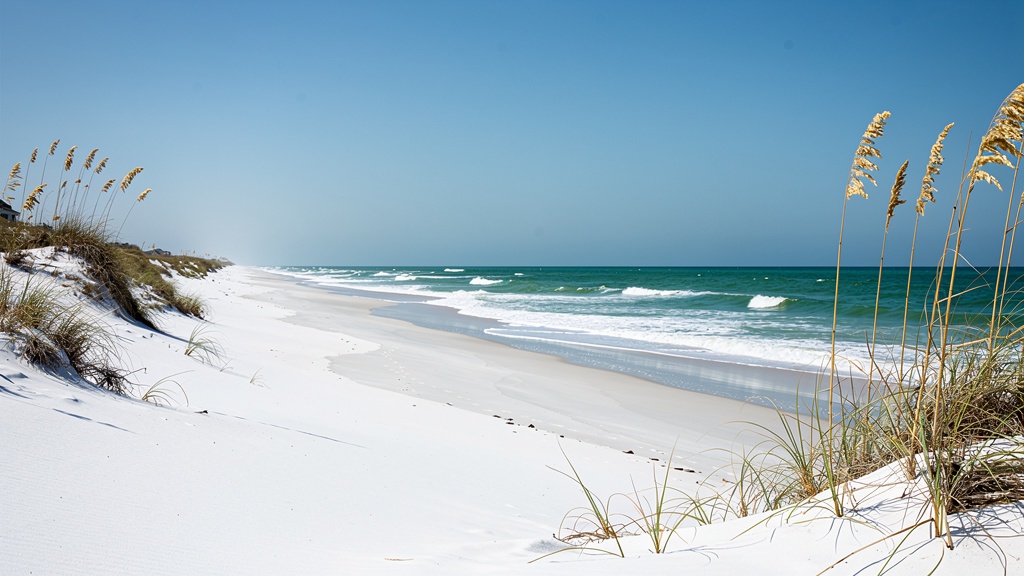
If Alabama has a single destination that consistently astonishes first-time visitors expecting something ordinary, it is Gulf Shores. The twin resort communities of Gulf Shores and Orange Beach together form Alabama's premier coastal destination — and they deliver beach experiences that many travelers insist surpass the more famous Florida resorts in terms of natural beauty, value, and authentic Gulf Coast character.
The beaches here are genuinely spectacular. The sand at Gulf Shores is composed of finely ground quartz crystal washed down from the Appalachian Mountains over millions of years, giving it an extraordinary sugar-white appearance and a squeaky-clean feel underfoot that is distinctly unlike the coarser sands found at many Atlantic Coast beaches. The water of the Gulf of Mexico at this latitude is famously warm — typically around 80°F by midsummer — and in certain light conditions glows with an almost improbably brilliant shade of emerald green that photographers struggle to adequately capture.
Anchoring the eastern end of the Alabama Gulf Coast, Gulf State Park represents one of the finest examples of integrated resort-nature tourism in the entire United States. The park's 6,150 acres encompass an extraordinary range of coastal habitats: pristine sugar-sand beach, fragile sand dune ecosystems stabilized by sea oats, freshwater lakes, salt marshes, and coastal pine forest. The recently constructed Lodge at Gulf State Park — a LEED-certified luxury resort that was designed specifically to provide an immersive natural experience — has become a destination in its own right, attracting architecture enthusiasts and nature lovers from across the country.
The park's trail system extends for approximately 28 miles through its diverse habitats, offering opportunities to observe dozens of species of shorebirds, migratory songbirds during spring and fall migration, nesting sea turtles (the park is one of the most important loggerhead sea turtle nesting sites in Alabama), and the spectacular wildflower displays that carpet the dunes in spring. The park's fishing pier — at 1,540 feet the longest public pier on the Gulf Coast — attracts anglers year-round and provides spectacular views of the Gulf at sunrise and sunset.
The waters surrounding Gulf Shores and Orange Beach offer an extraordinary range of water-based activities. Deep-sea fishing charters departing from the Perdido Pass area access some of the most productive offshore fishing grounds in the northern Gulf of Mexico, where red snapper, amberjack, grouper, king mackerel, and wahoo are taken in impressive numbers throughout the spring-to-fall fishing season. Closer to shore, inshore fishing for speckled trout, flounder, and redfish in the back bays and bayous surrounding the resort area provides excellent angling opportunities even for families with young children.
Dolphin watching tours are enormously popular — the resident population of Atlantic bottlenose dolphins in the bays and nearshore Gulf waters is large and reliably seen, and the experience of watching these wild animals surf the bow waves of tour boats against a backdrop of blue Gulf water and white sand beaches is genuinely magical. Kayaking, paddleboarding, parasailing, jet skiing, and snorkeling (at the nearshore artificial reef system that includes the famous ex-USS Yorktown wreck hull) round out a water sports menu that can occupy even the most active travelers for a full week.
The Gulf Shores dining scene has evolved dramatically over the past two decades from a collection of generic beach bars to a genuinely impressive roster of restaurants celebrating the exceptional quality of Alabama's Gulf seafood. Fresh-off-the-boat Gulf shrimp — sweet, plump, and harvested by local boat crews who have worked these waters for generations — are transformed into everything from classic shrimp and grits at upscale establishments to perfectly battered and fried shrimp baskets at beloved shacks that have been feeding beach visitors since the 1950s.
Oysters from the nearby Bon Secour Bay are considered among the finest in the country, with a distinctive briny sweetness that reflects the mineral-rich waters of their home. The annual National Shrimp Festival, held in Gulf Shores each October, draws hundreds of thousands of visitors and has been one of the Southeast's premier food festivals for over 50 years. Local seafood markets along Canal Road and along the Fort Morgan Peninsula road sell directly off the boat, allowing visitors to prepare fresh catch in their vacation rental kitchens — one of the great pleasures of a Gulf Coast visit.
Best visited April–June and September–October to avoid peak summer crowds and heat. Free beach access at multiple public access points. Gulf State Park entrance fee applies. Accommodation ranges from luxury beach condos to budget motels. Book summer accommodation months in advance.
Gulf Shores — among the most beautiful beaches on the entire Gulf Coast
The transformation of Birmingham over the past three decades is one of the most remarkable urban revival stories in the American South. Once a city that struggled with a post-industrial identity crisis and a painful historical legacy from the Civil Rights era, Birmingham has reinvented itself as one of the most dynamic, creative, and visitor-friendly cities in the entire southeastern United States — and the food scene alone has made it a pilgrimage destination for serious travelers nationwide.
Founded in 1871 at the confluence of railroad lines where rich deposits of iron ore, coal, and limestone converged to create one of the most fortuitous sites for steel production in the world, Birmingham grew with extraordinary speed to become the South's first truly industrial city. The city's industrial heritage is still visible — and celebrated — in museums, repurposed factory spaces, and the magnificent Vulcan, the world's largest cast-iron statue, who has stood atop Red Mountain watching over the city since 1904 and serves as Birmingham's most iconic landmark.
Birmingham's emergence as a premier American food destination is a story of chefs who trained at the country's finest culinary schools, then returned home to cook with Alabama's extraordinary local ingredients. The city's restaurant scene now encompasses multiple James Beard Award nominees, a thriving farm-to-table movement fueled by exceptional local producers, and a diversity of cuisine that reflects Birmingham's increasingly cosmopolitan population.
The culinary center of gravity runs through several vibrant neighborhoods. The Highland Avenue corridor — one of the most beautiful tree-lined commercial streets in the South — is home to landmark restaurants that have anchored the Birmingham food scene for decades. Avondale, a formerly industrial neighborhood that reinvented itself as Birmingham's most creatively charged district, is home to craft breweries, innovative restaurants, and one of the best farmers markets in the state. The Five Points South neighborhood retains its historic bohemian character and remains a reliable destination for everything from Vietnamese pho to classical French cuisine.
No visit to Birmingham is complete without engaging seriously with the city's profound role in the American Civil Rights Movement. The Birmingham Civil Rights Institute, located directly across the street from the 16th Street Baptist Church in the heart of the historic Civil Rights District, is universally acclaimed as one of the finest civil rights museums anywhere in the world. Its permanent collection tells the story of segregation, resistance, and the long struggle for equality through immersive exhibits that are both intellectually rigorous and deeply moving.
Kelly Ingram Park — the square across from the Baptist Church where police turned fire hoses and attack dogs on peaceful child demonstrators in May 1963 — has been transformed into a thoughtfully landscaped memorial park with sculptures commemorating the courage of those who marched. The park's powerful bronze sculptures by artist James Drake include the famous "Four Spirits" memorial to the four girls killed in the 1963 church bombing: Addie Mae Collins, Cynthia Wesley, Carole Robertson, and Carol Denise McNair.
Birmingham's arts and culture scene has expanded dramatically in recent years. The Birmingham Museum of Art, housed in a magnificent building that underwent a major expansion in 1993, has developed one of the finest permanent collections in the southeastern United States, with particular strength in Asian art, American art, and European decorative arts. The Barber Motorsports Museum near the eastern suburb of Leeds houses the world's largest motorcycle museum and a fully operational road racing facility that hosts professional racing events throughout the spring and summer seasons.
The Alabama Theatre — a magnificently restored 1927 movie palace on 18th Street North, complete with its original atmospheric ceiling painted to resemble a starry night sky — hosts films, concerts, and special events year-round and serves as a beloved community gathering place. The Lyric Theatre, Birmingham's oldest surviving theater (1914), has been magnificently restored and now hosts Broadway touring productions, concerts, and community events in a setting of Gilded Age theatrical splendor.
Visit the Civil Rights Institute and 16th Street Baptist Church. Dine along Highland Avenue. See the Vulcan at sunset. Explore the Sloss Furnaces National Historic Landmark. Spend a morning at the Birmingham Botanical Gardens. Catch a live show at the Alabama Theatre.
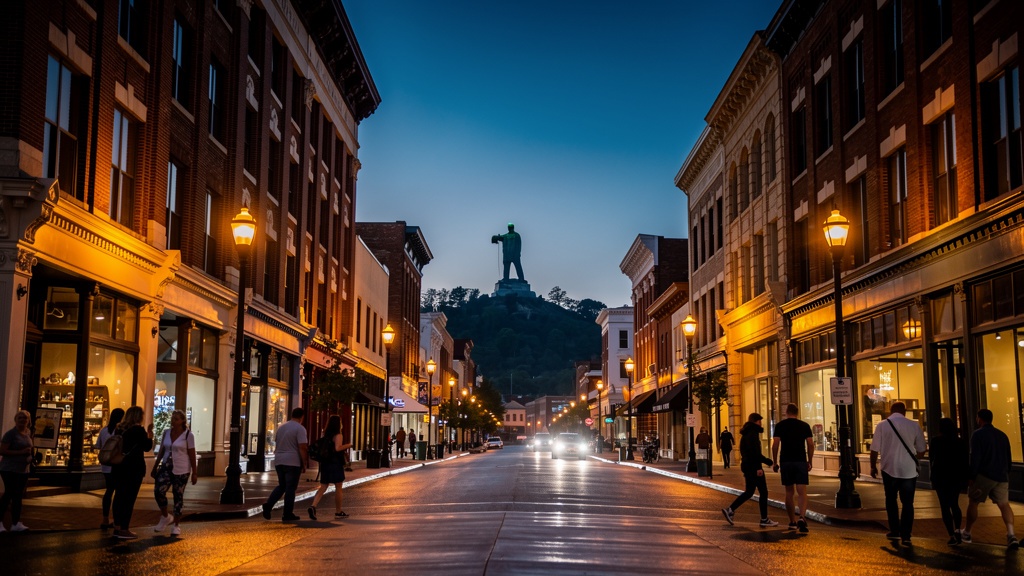
Birmingham at dusk — the Magic City's transformation has made it one of the South's most exciting urban destinations
Huntsville occupies a unique and fascinating position in the American imagination. This compact, intellectually vibrant city in the Tennessee Valley of north Alabama is simultaneously the home of some of the most consequential aerospace achievements in human history and one of the most rapidly growing and economically dynamic cities in the entire American Southeast. To visit Huntsville is to encounter a city that has always been comfortable living in the future.
The city's transformation began in 1950 when the US Army established the Redstone Arsenal and recruited a team of German rocket scientists — led by the brilliant, complex, and historically significant Wernher von Braun — to develop the ballistic missiles that would become the foundation of America's space program. Within a decade, Huntsville's rocket engineers had created the Redstone missile, the Jupiter rocket, and ultimately the spectacular Saturn V rocket whose three stages successfully propelled Apollo astronauts to the Moon six times between 1969 and 1972.
The United States Space & Rocket Center, located adjacent to NASA's Marshall Space Flight Center on the southwestern edge of the city, is the largest space museum in America and one of the top STEM-focused museums in the world. Its outdoor collection of full-size rockets — including a complete, vertical Saturn V rocket that visitors can walk under and examine at close range — is a staggering sight that moves visitors of all ages and backgrounds. The museum's indoor galleries cover the entire sweep of American space exploration history from the earliest Redstone tests through the current International Space Station era and the emerging commercial spaceflight revolution.
Beyond space, Huntsville offers a surprisingly rich array of cultural and outdoor attractions. The historic district of Twickenham — the largest antebellum residential neighborhood in Alabama — preserves a remarkable collection of Greek Revival and Federal-style homes built by the cotton planters and merchants who made Huntsville one of the wealthiest cities in the antebellum South. Walking tours of Twickenham provide an intimate encounter with a layer of Alabama history that is both beautiful and challenging to comprehend.
The Monte Sano State Park, perched on the mountain that gives the city its defining topographic character, offers excellent hiking trails with views across the Tennessee Valley that are particularly spectacular at sunrise and in autumn. The park's well-preserved 19th-century cabin village, the historic Burritt on the Mountain museum complex with its panoramic terrace, and the park's exceptional wildflower meadows in spring make Monte Sano a year-round destination of great appeal.
Huntsville's burgeoning restaurant and brewery scene reflects the city's highly educated and internationally oriented population. The Big Spring International Park in the city's downtown core — centered on the massive limestone spring that originally attracted settlers to the site in the early 19th century — provides a beautiful natural focal point for the city's walkable urban core, which has been extensively revitalized with boutique shops, coffee houses, restaurants, and galleries that make downtown Huntsville a genuine pleasure to explore on foot.
Space Camp — the legendary summer program for young aspiring astronauts and engineers — is housed at the US Space & Rocket Center. Adults can also attend Space Academy weekend programs throughout the year. Advance booking is essential.
For outdoor enthusiasts, Cheaha State Park and the surrounding Talladega National Forest represent Alabama's outdoor recreation crown jewels. Rising to 2,413 feet above sea level at Cheaha Mountain — the highest point in Alabama — this rugged highland landscape of ancient Appalachian rock formations, cascading waterfalls, old-growth forest hollows, and sweeping ridgeline panoramas offers hiking, rock climbing, mountain biking, and camping experiences that surprise travelers accustomed to dismissing Alabama as a flat, featureless Southern state.
The centerpiece of the Cheaha experience is undoubtedly the view from Cheaha's summit area, where a historic stone observation tower built by the Civilian Conservation Corps in the 1930s allows visitors to survey an extraordinary panorama of forested ridges stretching in every direction. On clear days in autumn — when the combined hardwood and pine forest explodes into a mosaic of red, orange, gold, and amber that rivals New England's celebrated fall foliage — the views from Cheaha are genuinely spectacular and can draw visitors from across the southeastern United States.
The Pinhoti National Recreation Trail — Alabama's premier long-distance hiking trail — begins near Cleburne County in the northeast and runs south for over 170 miles through the heart of the Talladega National Forest before eventually connecting northward all the way to the Appalachian Trail in Georgia. The Pinhoti is a genuine backcountry trail of outstanding quality, passing through remote forest landscapes, across clear mountain streams, and over rocky ridgelines that offer repeatedly spectacular views.
Day hikers can access any number of spectacular segments of the Pinhoti — or the forest's many shorter loop trails — without committing to a multi-day thru-hike. The Nubbin Creek Trail, the Cave Creek Trail, and the Skyway Motorway provide particularly outstanding day hiking experiences within relatively easy reach of the park's developed facilities. Bouldering and technical rock climbing are available at the impressive quartzite outcroppings at Cheaha, Hernandez Creek, and several other locations within the forest.
The Talladega National Forest supports a remarkable diversity of wildlife. Black bears — a symbol of Alabama's recovering natural heritage — have made a quiet comeback in the forest's most remote sectors. White-tailed deer, wild turkey, and river otters are commonly encountered. The forest's streams and rivers support several species of native trout, making fly fishing a significant draw for anglers. The forest is also considered one of the top destinations in the eastern United States for observing migrating hawks and eagles during fall raptor migration season, when thousands of birds funnel southward along the Appalachian ridges.
The summit of Cheaha Mountain — Alabama's highest point offers unforgettable panoramic views
Montgomery, Alabama's capital city, occupies a singular position in American history. It was here in 1861 that the Confederate States of America was founded and Jefferson Davis took his oath of office on the steps of what is now the Alabama State Capitol. Nearly a century later, it was here that Rosa Parks refused to surrender her bus seat in December 1955, igniting the Montgomery Bus Boycott and the modern Civil Rights Movement. And it was from here that Dr. Martin Luther King Jr. led the 1965 Selma to Montgomery marches that delivered the Voting Rights Act.
The weight of this history is palpable throughout Montgomery, and the city has invested substantially in museums and memorials that help visitors engage with both the darker and more inspiring chapters of its past. The Legacy Museum: From Enslavement to Mass Incarceration and the National Memorial for Peace and Justice — both created by the Equal Justice Initiative and opened in 2018 — have established Montgomery as one of the most important sites of historical memory in the United States, attracting visitors from around the world seeking to understand the full scope of American racial history.
The Rosa Parks Museum at Troy University, located on the site where Parks boarded the bus that December evening in 1955, provides an extraordinarily moving and meticulously researched account of the Bus Boycott and its significance. The Dexter Avenue King Memorial Baptist Church — where Dr. King served as pastor from 1954 to 1960 — continues as a functioning congregation and offers guided tours of its historically significant sanctuary and basement, where many of the strategic meetings of the Bus Boycott were conducted.
Beyond its Civil Rights significance, Montgomery offers a charming historic downtown with a walkable entertainment and dining district centered on Dexter Avenue, the Alabama Shakespeare Festival (one of the largest Shakespeare festivals in the United States, housed in a beautiful 750-seat theater complex in Blount Cultural Park), and the excellent Alabama Department of Archives and History, whose free public museum traces the full sweep of Alabama history from prehistoric times to the present.
The Alabama State Capitol building itself — the magnificent neoclassical structure atop Goat Hill that has served as the seat of Alabama government since 1851 — is a must-visit for its stunning architecture, its panoramic views over downtown Montgomery, and the extraordinary historical density of events that occurred on its steps and in its chambers. Free guided tours are available on weekdays, and the building's interior — with its double self-supporting spiral staircases and magnificent antebellum-era chambers — is one of the most architecturally impressive capitols in the American South.
The Legacy Museum and National Memorial for Peace and Justice require advance ticket reservations — book online before your visit. The Civil Rights Walking Tour connects key sites and takes approximately 2–3 hours at a leisurely pace. Free parking is readily available downtown on weekends.
North Alabama's Jackson County contains one of the most archaeologically significant sites in the entire American Southeast: Russell Cave National Monument. This remarkable natural rock shelter was continuously occupied by Native Americans for over 9,000 years — from approximately 7000 BCE to about 1650 CE — making it one of the longest continuously inhabited sites in North America and a place of profound significance for understanding the deep human history of the continent.
The cave itself is a massive natural limestone amphitheater — one of the largest natural cave entrances in the eastern United States — formed by an underground stream that carved through the soluble limestone bedrock over millions of years. Archaeological excavations beginning in 1953 revealed an extraordinary sequence of cultural deposits: stone tools, pottery, bone implements, hearths, and the physical remains of generations of Native American peoples representing every major cultural period from the Paleo-Indian era through the Woodland period to the historic Mississippian era.
The National Park Service has developed the site thoughtfully. The visitor center contains an outstanding museum with interpreted archaeological materials recovered from the excavations. A paved trail leads through forested hillside to the cave entrance — a genuinely awe-inspiring sight — where Park Rangers conduct regular living history demonstrations of prehistoric technologies including fire-starting, flint knapping, and atlatl use. The cave and its surrounding forested hills also support excellent birding and wildflower viewing in spring.
Perched atop DeSoto Mountain in northeast Alabama's Cherokee and DeKalb counties, Little River Canyon is sometimes described as the "Grand Canyon of the East" — a comparison that is more geologically apt than hyperbolic. The Little River, unique in being one of the few rivers in North America that flows entirely on top of a mountain, has carved a series of spectacular sandstone canyon walls rising up to 600 feet above the canyon floor, creating a landscape of dramatic beauty that is almost entirely unknown outside the region.
The 15,000-acre National Preserve that encompasses the canyon offers excellent hiking along the canyon rim — where views into the twisting gorge below are consistently spectacular — as well as swimming at DeSoto Falls and Canyon Mouth Park, kayaking through the canyon's Class III and IV rapids, and exceptional wildflower viewing in spring when the canyon's north-facing slopes support one of the finest displays of native wildflowers in Alabama. The canyon is particularly spectacular in autumn, when the mixed hardwood forest that clothes its walls ignites in colors visible for miles.
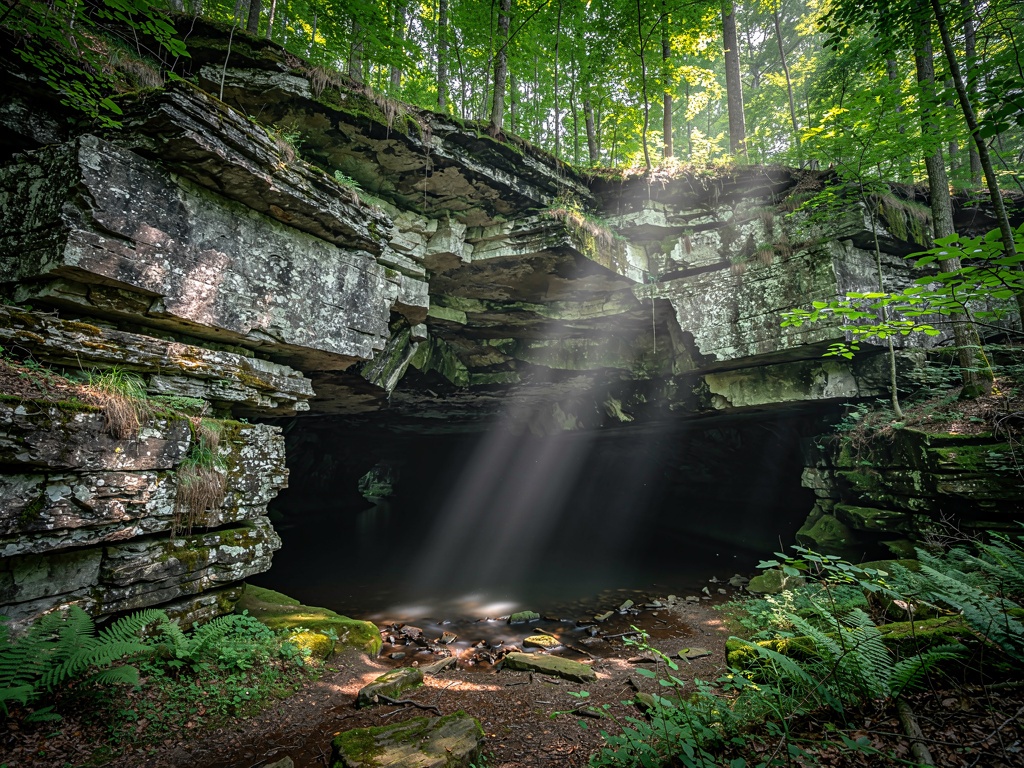
Russell Cave National Monument — 9,000 years of continuous human habitation at this extraordinary natural shelter
Combine Russell Cave, Little River Canyon, DeSoto State Park, and Mentone — a charming mountain arts community — into a spectacular 3-day north Alabama road trip. Base yourself at the DeSoto State Park lodge or Mentone Springs Hotel for an unforgettable highland Alabama experience.
Mobile is Alabama's only port city, and it wears its 300 years of history with the casual elegance of a place that has seen empires come and go while retaining its own singular character throughout. Founded by French colonists in 1702 as the first European settlement in the region that became Alabama and Mississippi, Mobile served successively as a French, British, Spanish, and finally American city — absorbing influences from each governing power into a cultural stew that remains richly distinct from any other Southern city.
The claim that Mobile hosted the first Mardi Gras celebration in North America — predating New Orleans by at least 15 years, with some accounts placing the first Mobile Mardi Gras as early as 1703 — is taken very seriously locally and is supported by convincing historical evidence. Mobile's Mardi Gras season, which draws approximately a million visitors each year, differs from New Orleans' famous carnival in important ways: it tends to be more family-oriented, more deeply community-rooted, and somewhat less commercially polished — in the best possible sense.
The architectural legacy of Mobile's long history is immediately apparent in its historic districts. The Church Street East and Oakleigh historic districts preserve some of the finest examples of antebellum residential architecture in the Deep South, including the remarkable Oakleigh House Museum — an 1833 Creole raised cottage of exceptional sophistication whose interior has been meticulously preserved to reflect the material culture of antebellum Mobile's prosperous merchant class.
Mobile Bay — the vast, shallow estuary formed by the confluence of the Alabama, Tombigbee, and several smaller rivers as they flow into the Gulf — supports one of the most productive commercial fisheries in the northern Gulf of Mexico and is the site of one of the most unusual natural phenomena in North America: the jubilee. A jubilee occurs when a sudden shift in water temperature and dissolved oxygen levels drives enormous numbers of fish, crabs, and shrimp to the shallow shore, where they can be literally scooped up by hand. Jubilees — unpredictable events that occur primarily on the eastern shore of Mobile Bay in summer — have been part of local coastal culture for generations and are celebrated with a combination of excitement and reverence that speaks to the enduring relationship between this community and its extraordinary natural environment.